
This post was updated May 27th, 2026
Nestled along Oregon’s spectacular coast, God’s Thumb is a striking geological formation that beckons hikers with its jaw-dropping views and unique shape. Resembling a giant thumb protruding from the earth, this lush green headland offers panoramic views of the rugged Oregon coastline and deep blue Pacific Ocean. Located near Lincoln City, Oregon, this hike is both challenging and rewarding, making it an essential experience for outdoor enthusiasts visiting the Oregon coast.
God’s Thumb isn’t just a beautiful place; it’s an adventure. The hike provides breathtaking scenery from start to finish, with open meadows, coastal forests, and sweeping ocean vistas. While some hikes in Oregon are popularized for their waterfalls or forest trails, God’s Thumb offers a rare combination of dramatic cliffs and expansive ocean views, making it a unique destination for locals and visitors alike.

After hearing about this amazing hike for years, I finally got the opportunity to go. The hike is indeed challenging, and I went just after a heavy rainfall. So you may be wondering, did I make it all the way to the edge of God’s Thumb?
Read to the end to get the full story! (Spoiler alert: persistence is key.)
Getting There: Driving to the Trailhead of The Knoll (to God’s Thumb) from Lincoln City
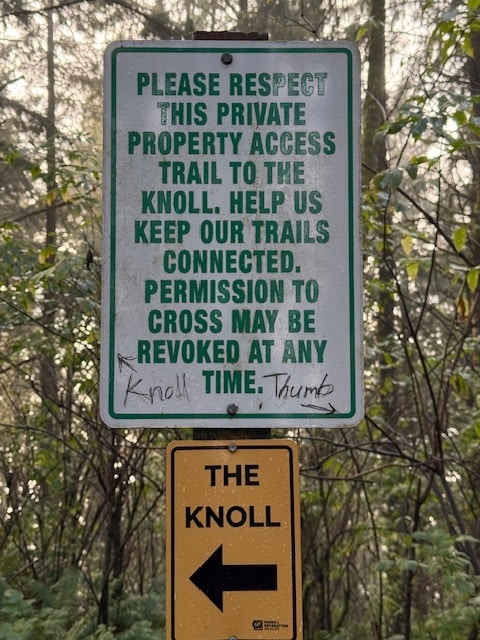
To reach the trailhead for God’s Thumb, drive to Lincoln City and head toward the Road’s End neighborhood and follow NE Voyage Ave north all the way to the end. There you’ll find a small parking lot with two main trailhead options: The first is the Road’s End Trailhead, which is the most popular starting point. Alternatively, you can start at the more secluded Knoll Trailhead, located to the left of the parking lot, which offers a slightly longer approach but is equally scenic.
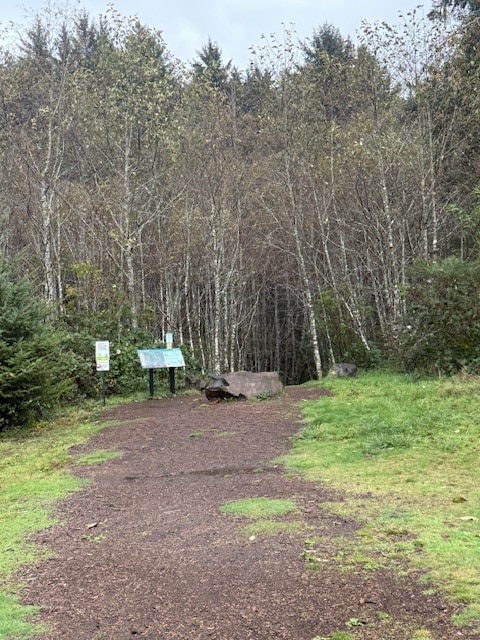
On your phone’s GPS, just input God’s Thumb Trailhead. It may show up as The Thumb via the Knoll Traihead (The Knoll is the official name of the loop hike you’ll be taking.)
From both trailheads, signage will guide you toward the main path to God’s Thumb. It’s important to note that parking can be limited, especially during peak hiking season, so try to arrive early or opt for a weekday visit.
Hiking to God’s Thumb
The hike to God’s Thumb varies slightly depending on the starting point, but most routes cover around 4.5 miles in a loop that brings you back to your starting trailhead. The trail takes you through open coastal forests, giving way to grassy meadows as you approach God’s Thumb. Along the way, you’ll enjoy beautiful views of the Pacific Ocean, Cascade Head, and the dramatic coastal cliffs.
Are you a beginner hiker, or just need a brush-up on Hiking 101? Read my full blog post here.

The loop trail means you won’t have to backtrack, and you’ll get to experience a variety of landscapes, from dense trees to wide-open ridges. However, be prepared for some moderate to strenuous sections as the trail has a few steep inclines. While not overly technical, the hike can be challenging due to its elevation gain and potentially muddy conditions. If there has been recent rainfall, expect sections of the trail to be very muddy and slippery, particularly as you near God’s Thumb.
Such was the case with my first hike to God’s Thumb. As we emerged from the woods to an open field, we could see the splendor that is God’s Thumb before us. My chest tightened and my excitement took on a new level, even through the aching burn in my legs.
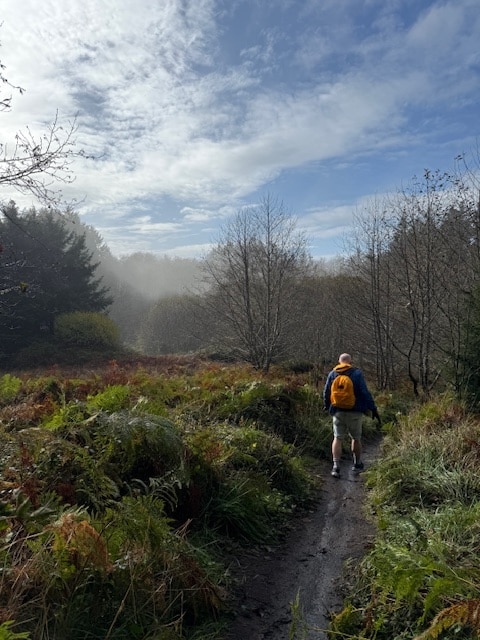
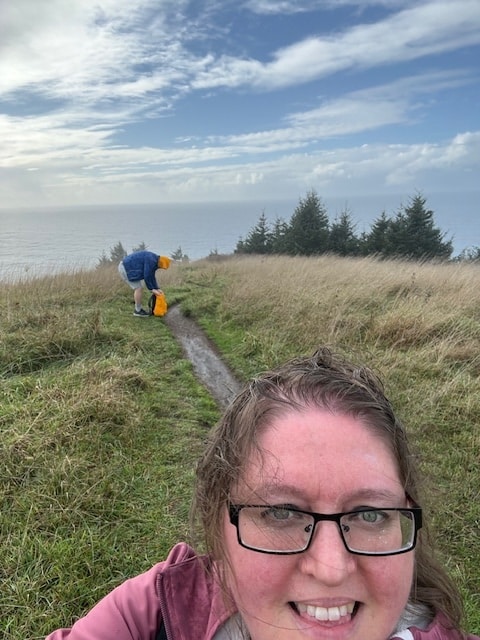
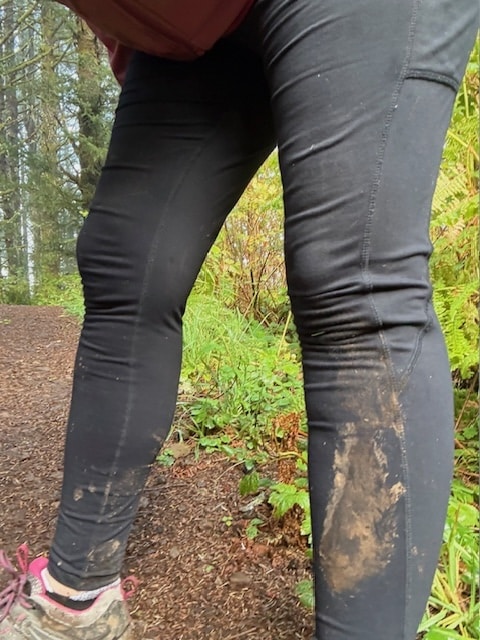
But as we descended a steep hill just before the last stretch, the mud on the ground worked against the mud already caked on the soles of my hiking shoes, and I simply could not get traction. Three times I fell on my behind, and my hiking partner, while faring slightly better, could not go any further. The mud just made it too treacherous. If we both had hiking poles and an extra pair of hiking shoes with good traction, we might have made it.
But we decided to stop just short of ascending the final leg to God’s Thumb itself, thereby robbing us of the amazing final view.
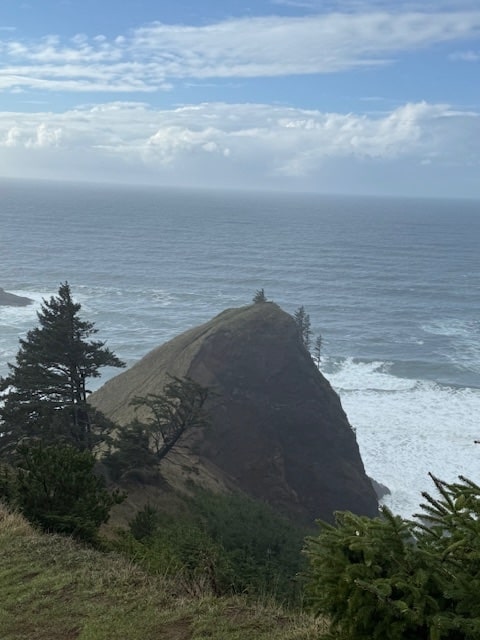
All I could do was stop and gaze out to the outcropping of the Thumb and the vast expanse of the Pacific beyond. We were SO CLOSE. But completing the hike safely would not happen that day. It was just too muddy from the recent downpour to continue on.
And so I vowed to come back in the Spring when the weather was drier.
What I Missed: The View from God’s Thumb

As you ascend the final stretch to God’s Thumb, you’ll be rewarded with one of the most spectacular views on the Oregon coast. The vantage point from the “thumb” offers a sweeping vista of the coastline and the vast Pacific Ocean below, making it an ideal spot for a break, some photos, and a well-deserved snack. On clear days, you can see for miles along the coast, while misty weather adds a mysterious, almost surreal quality to the scenery.
Along the way, we encountered several deer, soaring eagles, and salamanders scurrying across the trail. A healthy elk population is also in the area, although we didn’t see any.
Update: I Made It!
I picked a gorgeous sunny weekend to come back to Lincoln City the following May, and we did the trail again. My hiking partner, who lives in the area, had found a detour that wasn’t so treacherous and steep. But my return saw the conditions much better, and no mud! We were also better prepared this time around with hiking poles (they really do help on this hike!)

Once we reached the final stretch, as you can see, it is steep. But once you do get to the top, all of the effort is well worth it! And the view! My photos do not do it justice.
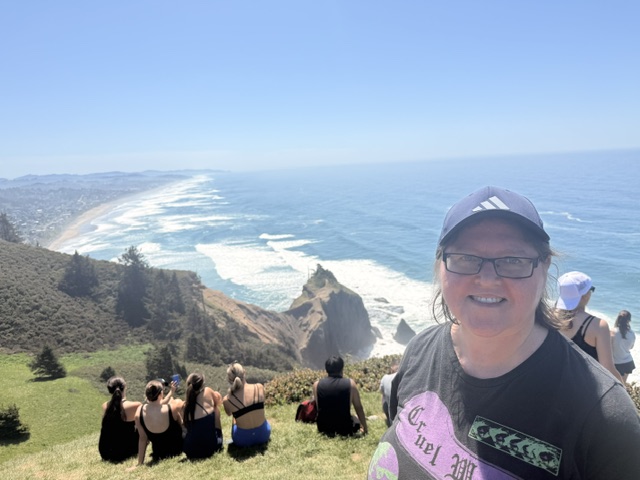
We sat and basked in the glow of the view and our success, along with about 30 other people. I have traveled the world and have not seen a view quite like this, right in my backyard.
Best Time to Hike to God’s Thumb
The best time to hike to God’s Thumb is from late spring through early fall when the weather is drier and the trail is less likely to be muddy. Avoid hiking in heavy rain or shortly afterward, as the trail can become treacherous, especially the final ascent to God’s Thumb (as what happened with us). Summer and early fall offer the most pleasant conditions, with wildflowers in bloom and clearer skies. However, spring and early fall can also provide fewer crowds if you prefer a quieter experience.
What to Wear and Bring for the Hike to God’s Thumb
Given the potential for muddy conditions and uneven terrain, it’s essential to wear the right gear for this hike:
- Hiking boots with good grip and ankle support are highly recommended, especially if you encounter mud.
- Waterproof clothing if there’s a chance of rain, and layers to adjust to changing temperatures.
- Trekking poles can be helpful for balance on the slippery sections.
- A small backpack to carry essentials, including water, snacks, and a map or GPS device.
- Snacks and plenty of water are essential to keep your energy up, especially during the climb.
- A camera is a must to capture the incredible views from the top.
Hiking to God’s Thumb is an unforgettable experience that brings you up close to one of Oregon’s most stunning natural wonders. From its lush forests to panoramic ocean views, this trail has something for every adventurer willing to take on its moderate-to-strenuous challenges. Whether you’re an experienced hiker or new to coastal hiking, this journey promises breathtaking scenery and a sense of accomplishment.
So lace up your boots, pack some snacks and water, and hit the Knoll trail to God’s Thumb. This coastal gem is calling, and there’s no better way to experience the beauty of the Oregon coast than by seeing it from the top of this iconic landmark!
FAQ’s About Hiking to God’s Thumb
Is there more than one trailhead?
Yes — and this is where God’s Thumb gets a little confusing.
The main approach hikers should look for is The Knoll / Villages Trailhead area, commonly accessed from NE Devils Lake Boulevard on the north end of Lincoln City. Several hiking resources now point people toward The Knoll as the preferred access because older routes and informal access points have caused confusion, parking issues, and private property concerns. One local trail resource specifically says God’s Thumb does not have a formally maintained trailhead and should be approached from The Knoll, which is maintained by the City of Lincoln City. (godsthumb.info)
There are also neighborhood access points that show up on maps, apps, or older blog posts, including routes near Roads End or residential streets. However, some of those can involve limited parking, unclear access, or the risk of cutting through private property. Gaia GPS notes that there has been confusion over the correct trailhead and says the official Knoll trailhead parking is on NE Devils Lake Blvd. (Gaia GPS)
Is there more than one way to get to God’s Thumb?
Yes, but the best answer is: hike to God’s Thumb via The Knoll.
The typical route follows The Knoll Loop Trail first, then continues beyond the maintained city trail onto a more rugged, unofficial spur toward God’s Thumb. AllTrails describes the route as following Lincoln City’s Knoll Loop for about 1.25 miles before entering Siuslaw National Forest on an unmaintained social trail to The Thumb. (AllTrails.com)
Depending on the exact route or app you follow, the hike is often listed around 4 to 5 miles round trip, though some route variations are shorter or longer. One guide describes it as a 4.7-mile lollipop loop when combining The Knoll Loop Trail with the trek out to God’s Thumb, while The Knoll-only loop is about 2.8 miles. (MB&B)
So, practically speaking, you have two main choices:
Option 1: Hike The Knoll only
This is the cleaner, more official hike. You still get excellent views over Lincoln City, Devils Lake, Roads End, and the ocean without committing to the rougher God’s Thumb spur.
Option 2: Hike The Knoll plus God’s Thumb
This is the more adventurous version. You start with The Knoll route, then continue toward the grassy coastal ridge and basalt formation. This is the version people usually mean when they say “the God’s Thumb hike.”
What is the trail like?
The hike begins inland, climbing through forested terrain with Sitka spruce, alder, salal, ferns, mud, and classic Oregon Coast greenery. Oregon Hikers describes the beginning as following an old roadbed through red alder and Sitka spruce, with blackberry, salmonberry, and elderberry along the way, and notes that the trail can be quite muddy. (Oregon Hikers)
After the forested climb, the trail opens up around The Knoll, where you get broad views over Lincoln City and the coastline. From there, the God’s Thumb spur becomes less manicured. Expect narrower tread, mud, steep sections, exposed grassy slopes, and erosion near the final approach.
The payoff is the coastal meadow and headland near God’s Thumb. It feels wild and cinematic — ocean below, wind in your face, cliffs dropping away, and Lincoln City tucked behind you. It is especially gorgeous on clear days, but fog can roll in quickly and make the route feel moodier and more difficult to navigate.
Important safety note
The final climb onto God’s Thumb itself is steep, eroded, and exposed. AllTrails includes an access warning asking hikers not to climb The Thumb, noting that climbing can be hazardous and contributes to erosion and resource damage. (AllTrails.com)
In other words: you do not have to stand on the very top of the thumb-shaped knob to enjoy the hike. The base/high meadow viewpoint gives you the big coastal drama without the “why did I make this life choice?” scramble.
Other features of the hike
Along the way, hikers can expect:
- Forest sections with ferns, mossy branches, mushrooms, and coastal vegetation.
- The Knoll viewpoint, which gives you views of Devils Lake, Roads End, Lincoln City, and the Pacific.
- Muddy trail conditions, especially in winter, spring, or after rain.
- Steep elevation gain, particularly near the beginning and again near the God’s Thumb spur.
- Ocean and headland views once the trail leaves the forest and reaches the exposed grassy ridge.
- Potential wildlife and coastal plant life, including birds, newts, wildflowers, and wind-shaped coastal trees.
God’s Thumb is best for hikers who want a short-but-spicy Oregon Coast adventure: not a long backpacking slog, but definitely more rugged than a casual beach walk. The route combines forest, hills, mud, coastal meadow, and cliffside views in a way that feels much wilder than its proximity to Lincoln City would suggest.
My recommendation: start from The Knoll access, wear shoes you do not mind getting muddy, skip the sketchiest final climb, and go on a clear day if you want the full “Pacific Ocean showing off” experience.