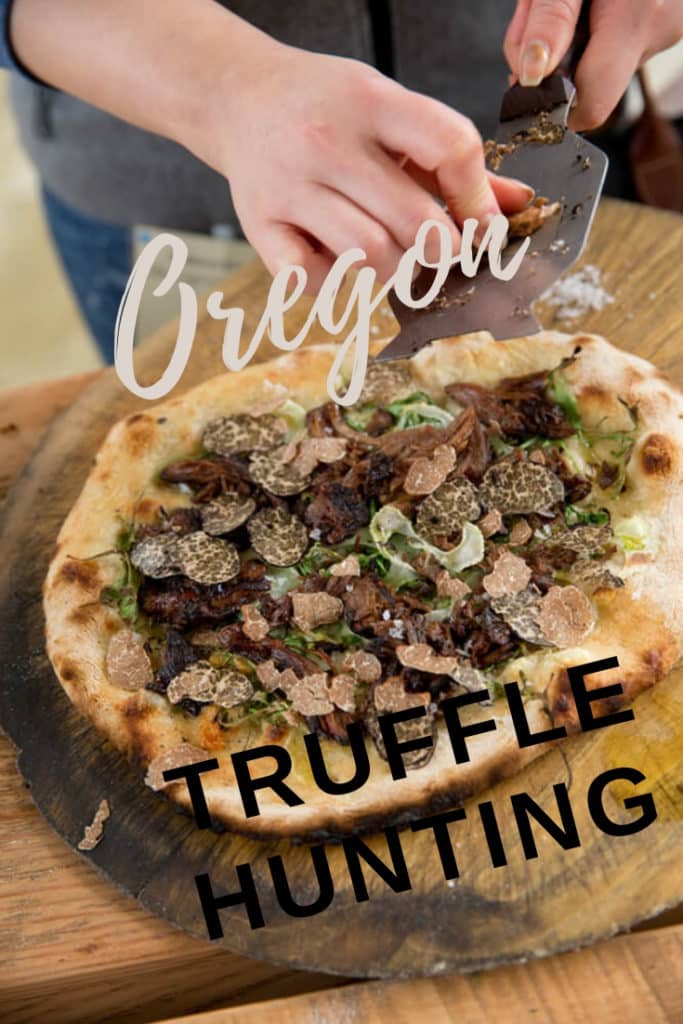
There’s something deliciously unhinged about crawling through the mud in January rain, hoping to dig up a fungus that smells vaguely of garlic and sells for $300 a pound.
But if you’ve ever dreamed of channeling your inner foodie adventurer—or just want a weird Oregon story to tell—truffle hunting in Oregon delivers.
On a drizzling January morning in the Willamette Valley, I joined a group of seasoned truffle hunters (and their dogs) to try my luck. I had no dog. Just a rake, a raincoat, and zero clue what I was doing.
In this post, I’ll walk you through what truffle hunting in Oregon is really like, how to do it with or without a dog, and what you need to know before you wander into the forest hoping to strike gourmet gold.
What It’s Like to Go Truffle Hunting in Oregon
That cold morning, I met my (professional) truffle hunting friends in the northern Willamette Valley near Dundee, and a couple of them had dogs with them. Apparently dogs can be trained to sniff out really good, ripe truffles.
Oregon truffles most often grow right underneath Douglas Fir Trees, on their roots, not far under the soil. Fifteen to thirty-year-old Douglas Firs, to be exact! Why are those truffles so hooked on age-appropriate trees?
My gloves were soaked within five minutes, my rake kept snagging on roots, and I was already questioning my life choices… until I saw someone squeal over what looked like a dirt clod.
Should You Bring a Truffle Dog?
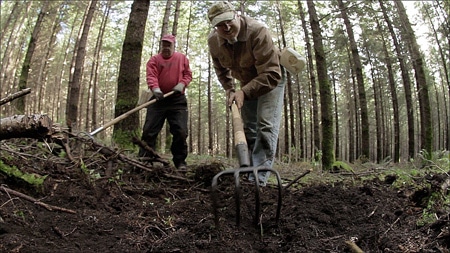
Digging for and finding truffles takes patience. Lots of patience. You may be out in the woods for hours and not find a thing. You are, in fact, competing with squirrels and other truffle hunters. If you don’t have a dog you will definitely need a rake, and the truffles almost always appear a couple of inches down in the soil, underneath the leaves and other debris at the base of the tree.
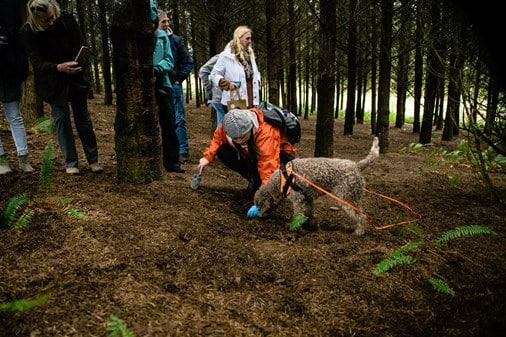
One dog named Buster found five truffles in under 30 minutes. Meanwhile, I was bonding with a rock I thought was a truffle for ten solid minutes.
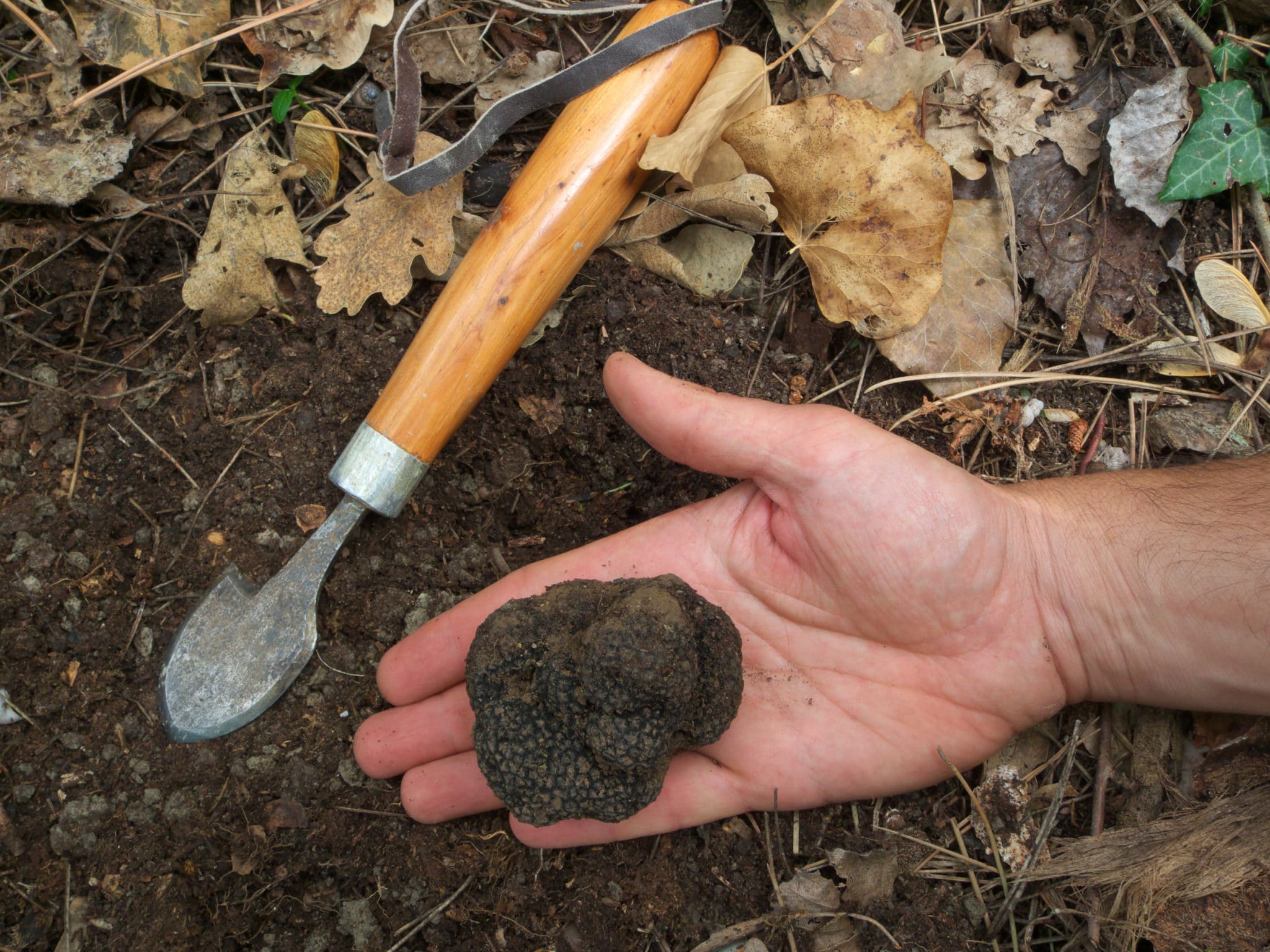
We were also in the market for finding the coveted black truffle. At $300 a pound, no wonder people specifically train their dogs to sniff out these buggers. These delicacies are akin to gold. Finding the black truffles under the dim light of the canopy proved to be more challenging. I’m sure some black truffles eluded me, simply because I couldn’t see them.
Fun fact: Black truffles prefer the older Douglas firs, while white truffles can be found under the younger trees. And to find the ultra-coveted white Alba truffle? You’re looking at a $3,000 per pound payout.
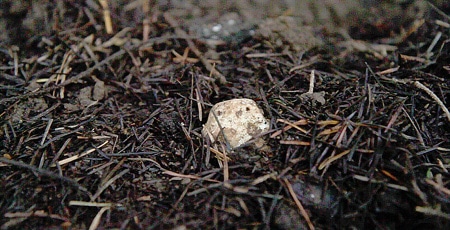
But even though we were in direct competition with the squirrels (the little suckers love eating truffles probably more than we humans do) they also help us find them. As we scour from tree to tree, we look for signs of squirrel rummaging at the base of the tree. A tell-tale sign that they have been scrounging for truffles. Any truffle they don’t get at it is prime pickings for us.
There was a suspiciously smug squirrel near a tree I had just raked around. I swear it smirked at me.
Success!!
With our rakes, we gently scrape at the ruff to reveal (hopefully) a lonely truffle, and if we’re extremely lucky, two of them. It’s painstaking work, to be sure, but the rewards are great. Which is why more people are taking to the task.
And then I found one. I experienced a rush of adrenaline I hadn’t felt in a long time. My white truffle, glowing luminesce under a bit of dirt, was about the size of a large jawbreaker. I held it like it was the Hope Diamond, even though it looked like a sad potato.
We did well that day. My friends found a little over a dozen truffles a piece. I was not so lucky, I only bagged about 8. Fair enough. I was a newbie anyway and had a ton of fun…probably the most fun I would ever have outdoors in a January drizzle.
Once truffles are gathered, they must be carefully washed, then dried and cured in cool temperatures for several days to a few weeks to reach their full bloom. Mine made it into a risotto that night, and I swear it made the drizzle worth it. My kitchen smelled like fancy forest funk for days.
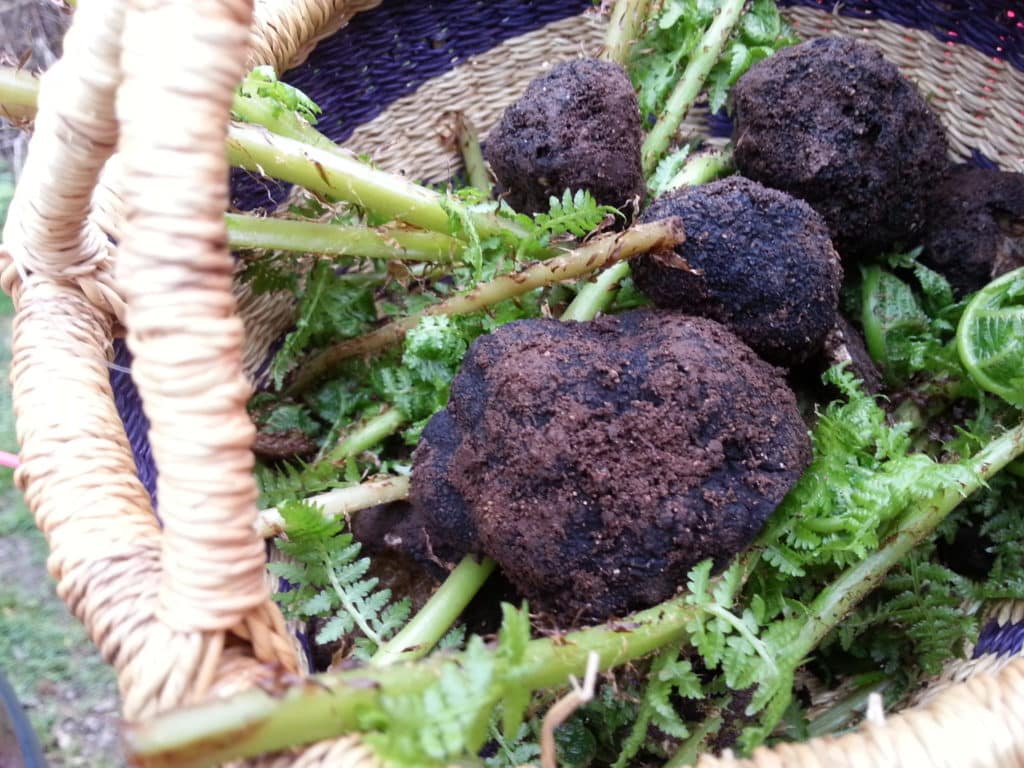
Although the truffle-hunting business can be lucrative…in the end, it’s not for me. No, I will not be hopping on the gravy-train that is a bit like the gold rush of the Pacific Northwest. It’s back-breaking work, and often you search for hours in the dark, damp woods and come up empty. I’d rather keep exploring other great places, write about them, and bring my exciting adventures to you!
If you would like to try your hand at truffle hunting, here’s what you should know:
- As mentioned above, truffles only really grow underneath fairly young Douglas Fir trees, along the base, at the roots of the tree.
- The height of truffle season, when they are most ripe, in January.
- Truffles, although a fungi, are nothing like chanterelle season in the Pacific Northwest, which starts in the autumn.
- Dogs can hunt for truffles, but they must be trained by professionals. Not any ol’ dog can do it and training is not cheap. It can cost thousands of dollars to properly train a dog to hunt truffles. But having a trained dog has its advantages because they know where to find the best, most ripe truffles.
- Without a dog, just finding a truffle is not enough. You must be aware of the level of ripeness of the truffle. In many cases, you will have to properly store the truffle until it becomes ripe before it can be eaten or have the oil extracted from it.
- When hunting for truffles, be very aware of whether or not you are hunting on private or public land. If it is private, it is imperative you get permission from the landowner. This is for your benefit.
Oregon Truffle Festival
Want to find out more about the wonderful world of truffle hunting? If you are serious about diving into the world of truffle hunting, The Oregon Truffle Festival is the place where foodies, chefs, and truffle enthusiasts gather to celebrate Oregon’s buried treasures (quite literally). Imagine wandering through lush woodlands on a truffle hunt, led by the world’s most adorable experts – that’s right, truffle-sniffing dogs! Afterward, you can mingle with fellow truffle lovers over a divine wine and truffle pairing, because let’s be honest, wine makes everything fancier. The festival’s masterclasses and dinners, cooked up by culinary maestros, turn these little dirt-dwelling delights into gastronomic gold. Whether you’re a truffle aficionado or just truffle-curious, the Oregon Truffle Festival is an aromatic adventure not to be missed!