A Pretty Good Guide to Hiking Mount Rainier National Park
This post was updated July 1, 2025
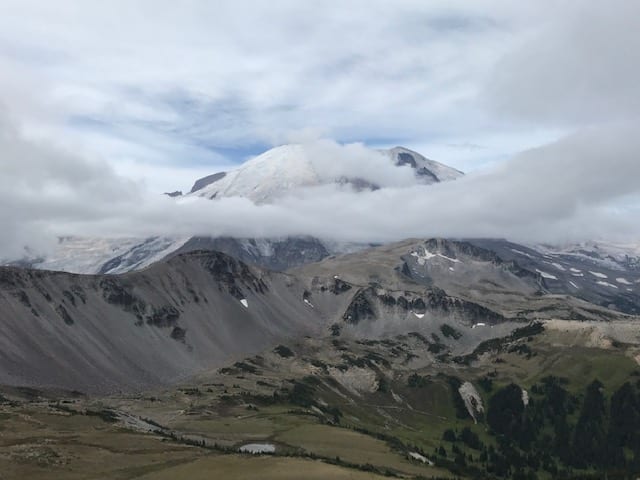
There’s a moment on the Skyline Trail where the clouds part and Mount Rainier rises in front of you like something out of a dream. The first time I saw it, I actually stopped in my tracks—it was that stunning. If you’re planning a visit and wondering which trail will give you that kind of moment, you’re in the right place.
After hiking in Mount Rainier National Park several times over the years, I’ve explored everything from easy forest loops to all-day summit grinds. And while the park is famous for its views, wildflowers, and alpine lakes, not every trail gives you the magic you might be imagining.
For me it’s the most beautiful area of Washington State.
This guide is for hikers—whether it’s your first time or your tenth—who want to know where to go for unforgettable views, manageable trail lengths, and the best chance of seeing what makes Rainier so iconic. I’ll share my top trail picks, insider tips, and a few personal lessons learned along the way (like why I always bring a second pair of socks).
Let’s get into the best hikes Mount Rainier has to offer—and which one is right for your next adventure.
Hiking Mount Rainier
The Basics: Mount Rainier is 14,411 feet above sea level. That’s about four thousand feet taller than Mount Hood in Oregon. About 10 thousand people attempt scale Rainer every year, and only half of them make it.
Fun fact: Paradise Valley inside the park is one of the snowiest places on Earth – getting an average of 53 feet of fresh powder yearly!
Heads up! Timed entry into the park varies according to passes that are open and general weather conditions. Before you go, be sure to visit the National Park Services dedicated page to Mount Rainier, so you can plan your trip accordingly.
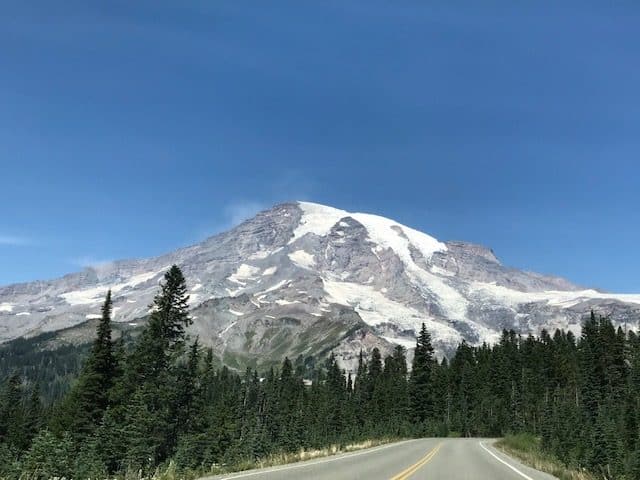
Start your journey in Paradise (for real) and visit the Jackson Visitor Center. Inside there is lots of information about the park, a gift shop, and a café. Don’t forget to grab a map for all the best hikes I’ll mention here.
[convertkit form=6486833]
Alternatively, you can start your visit at the Sunrise Visitor Center. Situated at the highest point in the park that is accessible by vehicle, the drive alone is worth the visit. Simply stunning. There are a few trails from this visitor center if you want to explore the area on foot. The hikes have more variety here with generally less crowds.
The Five Sections of Mount Rainer National Park:
- Paradise – the most popular section of the park, just south of the mountain.
- Sunrise – for more hearty hikes, located in the northeast region of the park.
- Ohanapecosh – less crowds, located at the southeast corner of the park.
- Longmire – some great hikes here, located at the southwest part of the park.
- Carbon River/Mowich Lake – located in the northwest part, another beautiful spot where the crowds are thinner.
This is a great website for Mt. Rainer Trails Map.
This following is a list of all the hikes I personally did (except for one, which was highly rated and I have not yet tackled, but I included it anyway.) There are many more hikes in this park and I strongly encourage you to do as many as you can to see all aspects of this amazing mountain.
Grove of the Patriarchs: A Peaceful Walk Among Giants
I didn’t expect to be moved by this trail—but something about standing next to 1,000-year-old trees, their roots like sculptures, really hit me. The Grove of the Patriarchs is a short, flat hike that feels like stepping into an ancient world. It’s perfect for a rest day or if you’re hiking with kids or less mobile companions.
Why you’ll love it: This is the trail where you slow down. A suspension bridge leads you to a lush island filled with old-growth trees that make you feel like you’ve shrunk. It’s accessible, beautiful, and surprisingly quiet if you go early in the morning.
Local tip: Visit just after sunrise when the light filters through the trees—it’s magical, and you’ll have it mostly to yourself.
Skyline Loop Trail
An epic hike through several different kinds of terrain, rated as difficult. The Skyline Trail Mt Rainer is as close to the mountain as you can get without donning your mountaineer’s cape and actually scaling the mountain. It’s the best day hike on Mt rainier. I am in reasonably good shape and did this hike with no problem, taking frequent brakes.
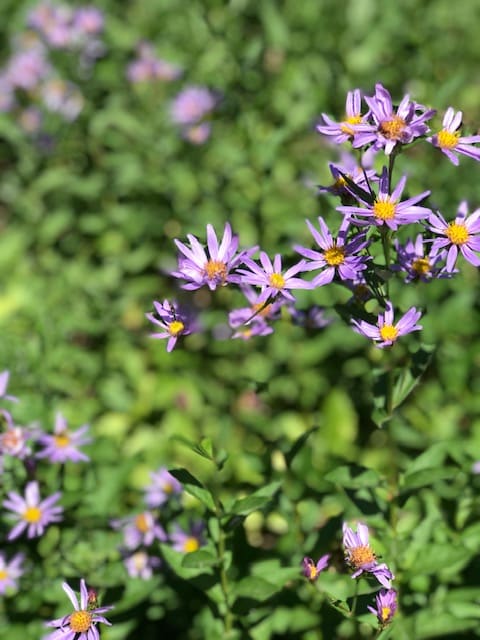
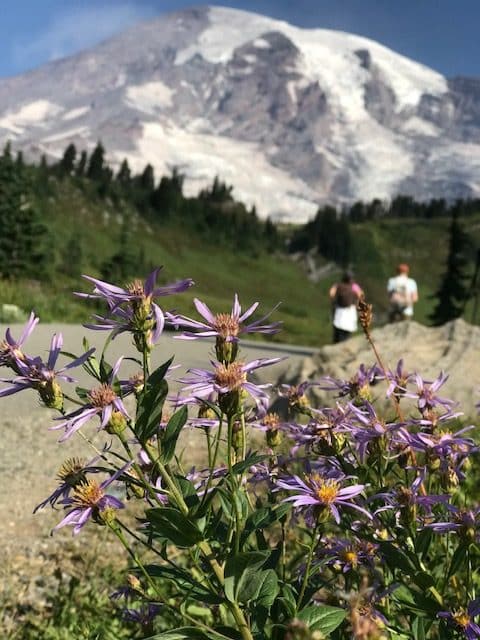
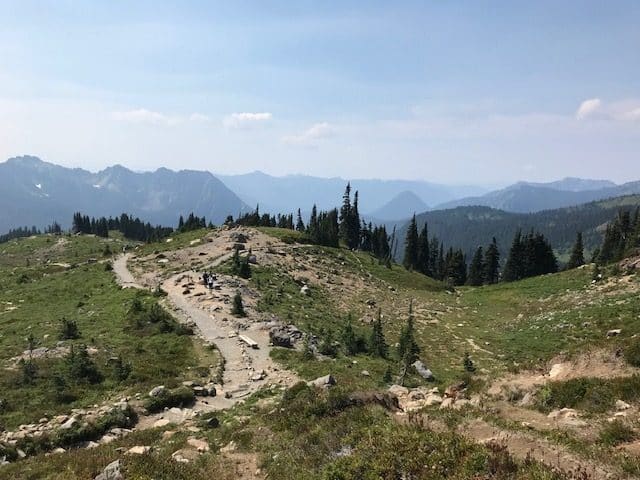
All I can say is that this BY FAR my favorite hike at Rainier National Park. Pack a lunch and take your time with this one, kids. Because it’s epic. I hiked it at the tail end of wildflower season, and I came across some stunning lupine, cascade asters, scarlet paintbrush, and more. The loop trail starts and ends at the lodge, so feel free to take it in either direction. Six miles long, you’ll definitely want to savor it slowly and stop to revel in the scenery often. The entire loop takes about 4 hours to complete.
About two hours in, I could feel an uncomfortable twinge in my hiking boots. Upon closer inspection, I realized my socks wore a hole in the heel. Being a somewhat experienced hiker, I always bring an extra pair for moments exactly like this. After a quick change, I was back in business. Because nothing ruins a gorgeous hike more than when you are not comfortable on the trail.
The trail climaxes at the stunning Panorama Point where you’ll get the closest to the mountain. You’ll also see wildlife. I had a couple of close encounters with Marmots, chipmunks, and deer. One chipmunk clearly was not afraid of humans and even jumped on my lap trying to get at my Cliff Bar. Cute little bugger and I confess I was more charmed that annoyed.

Having said that, I’m going to get on my soapbox just a tad and say NEVER FEED THE WILDLIFE. It does them more harm than good and they are not meant to be fed by humans. Nevertheless, my furry friend obviously had been fed by more than a few silly humans, lest he would not have jumped right in my lap! He was fat, too. Just sayin’.
Mt. Fremont Lookout Trail: The Insta Shot Seen Round the World
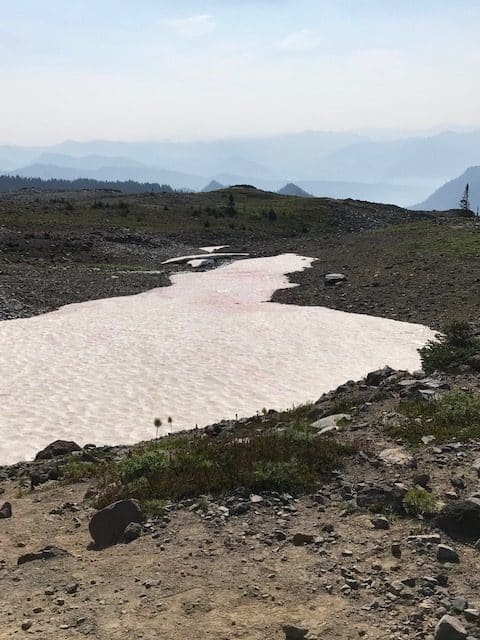
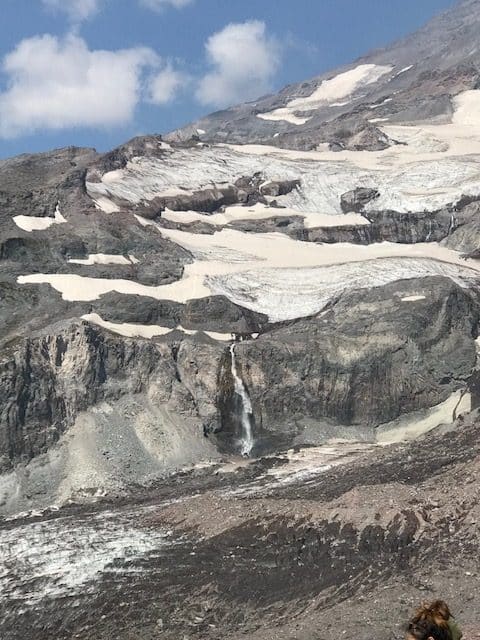
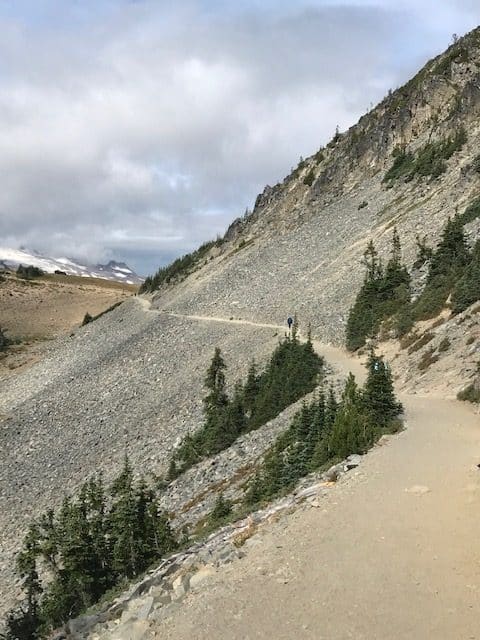
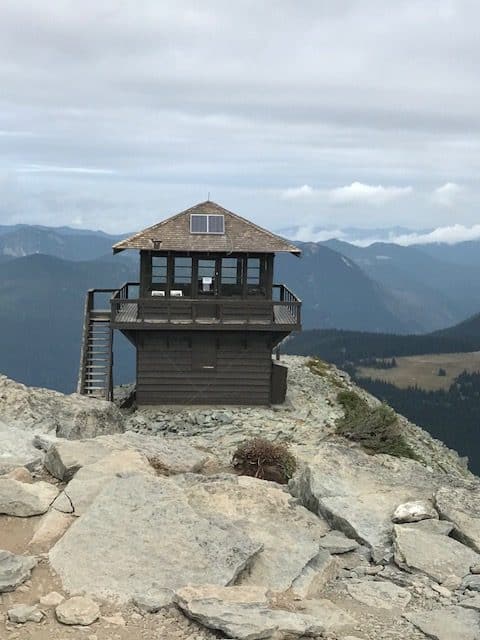
This trail is where I got the shot that’s still my phone background. The Mt. Fremont Lookout is a moderate 5.6-mile hike that rewards you with panoramic views and a dramatic fire lookout perched at the edge of a cliff.
What makes it special: You’ll pass alpine meadows, possibly spot mountain goats, and feel like you’re walking in a movie. But be warned—it’s exposed, and wind can be intense near the top.
My experience: I underestimated how cold it could get at the top in July. Bring layers, even on a warm day, and stay a while—it’s not a trail you want to rush.
Comet Falls Trail: Your Quads will Curse You – But It’s Worth It
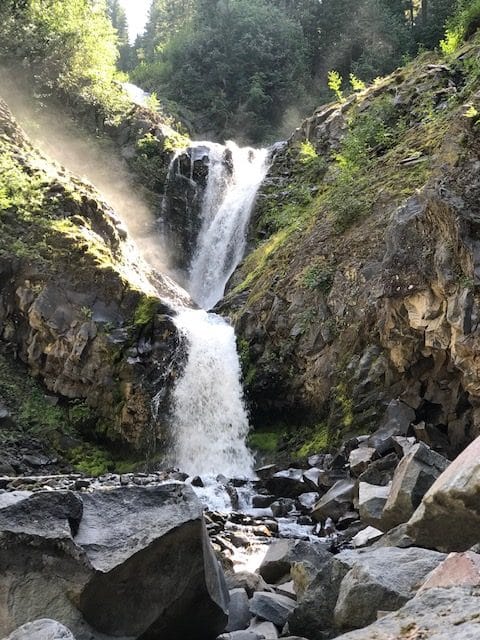
The first time I hiked Comet Falls, I didn’t think much of the incline—until about halfway up. This is a workout, but the payoff is massive. The waterfall crashes down over 300 feet, and mist fills the air like something out of a fantasy novel.
Trail vibe: It’s rugged and more challenging than it looks, with switchbacks and rocky sections. But if you want a “wow” moment with fewer crowds than some other trails, this is it.
My tip: Wear solid hiking boots—this isn’t the place for sneakers. And don’t stop at the base of the falls—climb a little higher for a view that most people miss.
Nisqually Vista Trail: Short and Sweet with Big Views
When my parents visited, this is the trail I took them on. It’s a one-mile loop that’s relatively flat, making it great for a gentle introduction to Mount Rainier hiking. But don’t let the easy path fool you—the views of the Nisqually Glacier are jaw-dropping.
Why it’s worth your time: On a clear day, this is one of the best effort-to-reward ratios in the park. It’s also a great trail to start or end your trip.
Pro move: Time your visit for late summer to see wildflowers in bloom—they frame the glacier views like a postcard.
The Wonderland Trail (didn’t do, but worth mentioning)
This is a footpath around the entire circumference of the mountain and is over a century old. At 93 miles long, the hike is not for the faint of heart! I didn’t do this hike just because of time limitations, but many people do this hike in its entirety! Many more pick a section and hike it; just depends on your desire and how much time you have. Regardless, it is a hike of a lifetime. If you dare to tackle the whole thing, plan carefully (organize camping and obtain permits) and allow 10-12 days to complete it. But do it between early Summer and September, as that’s the only time the entire trail is open to the public.
Where to Eat and Stay at Mount Rainer
Whittaker’s Bunkhouse. For the budget minded, this historic bunkhouse is located in the nearby town of Ashford. Built in 1912 and renovated in 1990, it is perfect for skiers, backpackers, and those who just want a clean and cozy place to rest their head after a day of adventure. Rooms with private baths, as well as hostel-like rooms are available. There is also a cottage for larger groups, and a café on site.
Paradise Inn. Located inside the park, this is the ultimate National Park lodge experience. Built in 1919, this historic place has all the rustic charm you could ever hope for. A massive fireplace greets you in the lobby, and with floral light fixtures – it’s really like stepping back in time. You won’t find TVs in the rooms and really, why have them? You’re here to unplug.
Copper Creek Inn & Restaurant. If it is a resort experience you prefer, this is it. The nearby town of Ashford is a great home base for your Mount Rainer adventures. They offer both cabins and private rooms, both with an “upscale roughing it” vibe. Many of their cabins have private hot tubs, and if you opt for just a room, you can sign up for a time to use the public hot tubs in the forest! The restaurant serves comfort food at its finest. They bake their breads daily, and their home-made blackberry pie is a must.
Stuff You Need to Know about Mount Rainier
- When to Visit? Well that depends on how you want to experience her! If you are into skiing, snowshoeing and other winter sports, come when the powder is fresh during the winter. If you are into camping and hiking, late spring through early autumn is the time to come.
- With an average visitation of around 2 million, Mount Rainier is one of the more popular national parks. So expect crowds, especially in the summertime. To avoid the peak of crowds, try to visit during the week, and come as early in the morning as you can. Most people saunter in around mid-morning. This is also good for finding parking in the Paradise area.
- Pets are NOT allowed on the trails or in the park buildings.
- Wildflower are a big deal here (they’re gorgeous) and the peak time is early to mid-August, when they are in full bloom.
- Another great time to visit is early autumn from September through October. The temperatures are cooler, so dress in layers. But the crowds are much less, and most of the trails are still open.
- The best time to hike is July through early October. Snow is a real possibility any other time of the year, and really gets dumped with the white stuff November through March.
- This is a national park, so admission fees are required. I recommend the America the Beautiful Pass, which gets you into all U.S. National Parks for a full year.
- As previously mentioned, Mt. Rainier is a HUGE park and there are no gas stations within it, so be sure to fill up every day once you’re outside the park.